
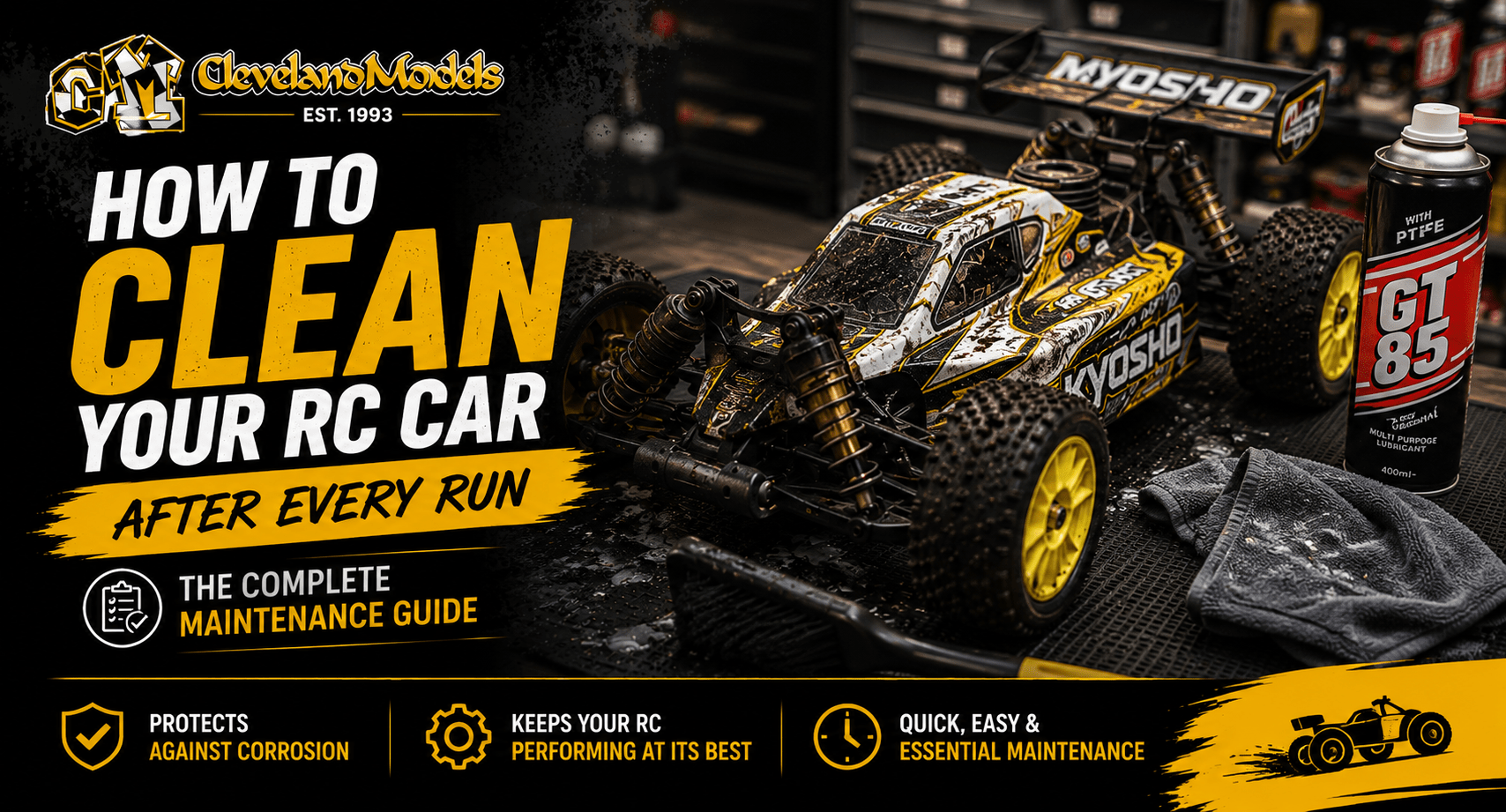
Whether you’re bashing through muddy woodland trails, tearing up a BMX track or enjoying a few packs in the local park, giving your RC car a quick clean after every run is one of the best ways to keep it performing at its best.
The good news? You don’t need hours in the workshop. Most routine cleans take around 10–15 minutes and can help you spot worn or damaged parts before they become bigger (and more expensive) problems.
Why Cleaning Your RC Car Matters
Every run leaves behind dust, grit, mud or moisture.
If left in place, these can:
- Increase wear on moving parts
- Trap moisture that encourages corrosion on metal components
- Hide cracked suspension arms or loose screws
- Make future maintenance more difficult
A quick clean also gives you the opportunity to inspect your model before your next outing.
What You’ll Need to Clean Your RC Car
Keeping a small maintenance kit handy makes cleaning much easier.
We recommend:
- Soft detailing brush or paintbrush
- Microfibre cloths
- Compressed air or an electric air blower
- Hex drivers for removing wheels if needed
- A plastic-safe maintenance spray
- Bearing oil (when servicing bearings)
- Step 1: Remove Loose Dirt
Start by removing as much loose dirt as possible before reaching for any cleaning products.
A soft brush works well for dry dust, while compressed air is excellent for blowing debris out of suspension arms, chassis braces and tight corners. Many experienced RC hobbyists favour compressed air as the quickest way to remove loose dirt after a run.
Avoid holding the air nozzle too close to bearings or seals, as very high-pressure air can force dirt further into components.
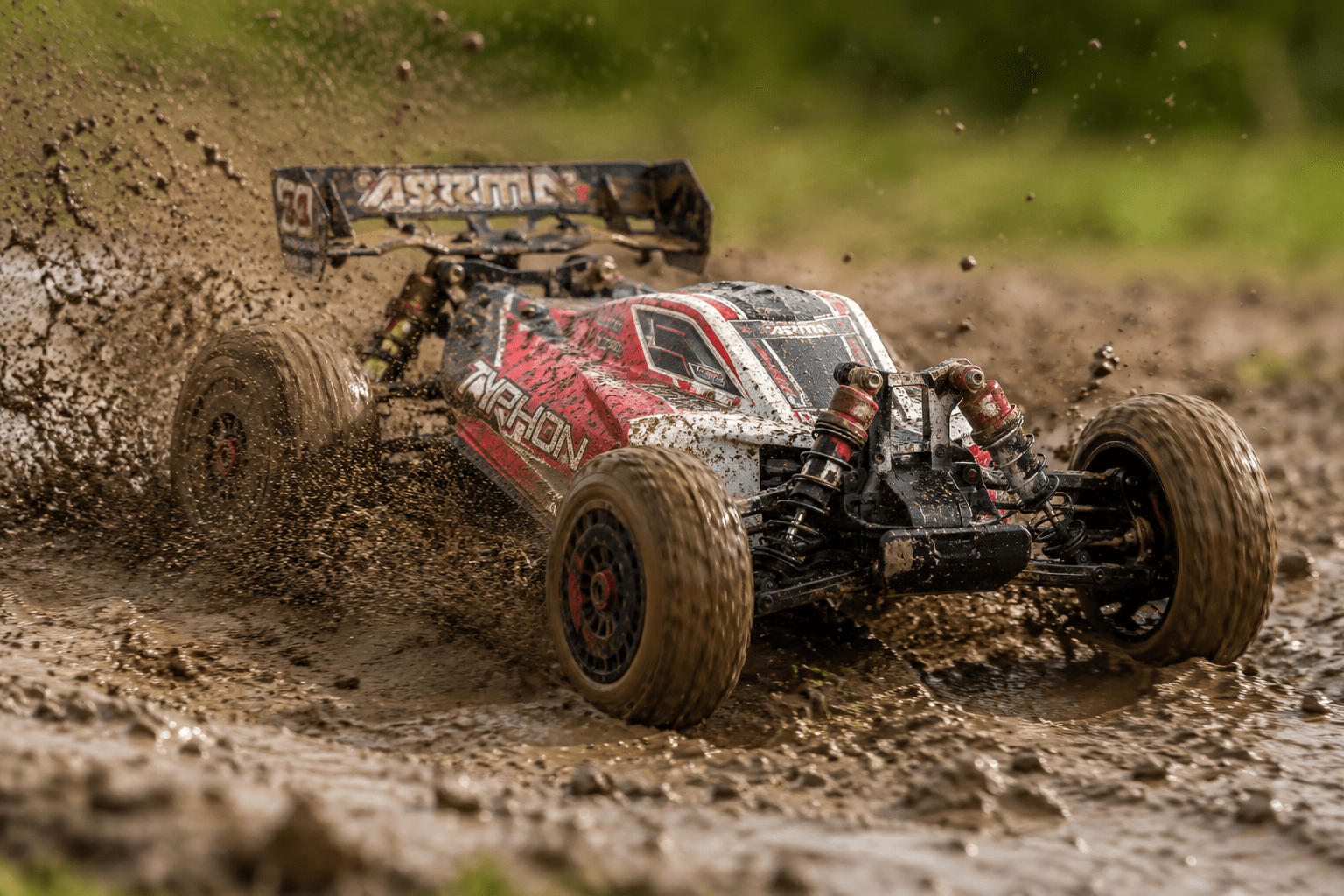
Step 2: Dealing with Mud
If your RC has been through mud, allow thick mud to dry slightly before brushing it away.
For waterproof or water-resistant models, you can rinse away stubborn mud with low-pressure water if recommended by the manufacturer. Afterwards, dry the vehicle thoroughly, paying particular attention to bearings, hinge pins and screws, as trapped moisture can lead to corrosion.
If your model isn’t designed for wet running, avoid introducing unnecessary water.
Step 3: Wipe Down the Chassis
A microfibre cloth is perfect for removing remaining dirt from:
- Chassis
- Shock towers
- Suspension arms
- Body shell
- Wheels
It’s also a good opportunity to check for loose screws or damaged parts.
Step 4: Protect Metal Parts
Once the car is clean and dry, a light application of a plastic-safe maintenance spray can help displace moisture, loosen remaining grime and leave a protective film on exposed metal parts. Products such as GT85 are commonly used by mechanics and many RC enthusiasts for this purpose because they clean, lubricate and help protect against corrosion.
Avoid soaking bearings or spraying directly into electronics unless the product specifically states it is suitable, and always follow the manufacturer’s instructions.
Step 5: Inspect Before You Put It Away
Cleaning is the ideal time to spot problems before your next outing.
Check:
- Suspension arms for cracks
- Wheel nuts are tight
- Steering links are secure
- Tyres for damage
- Shock absorbers for leaks
- Body posts
- Driveshafts
- Spur and pinion gears
Finding a worn part now is much better than discovering it halfway through your next run.
What About Sand?
Sand deserves special attention.
Unlike mud, sand is highly abrasive and can quickly wear gears, bearings and drivetrain components if left inside the chassis.
After driving on the beach or sandy terrain:
Brush away as much sand as possible.
Use compressed air to clear hard-to-reach areas.
Inspect bearings and drivetrain components for gritty movement.
Re-lubricate any parts that require it according to the manufacturer’s recommendations.
Common Cleaning Mistakes
Avoid these common pitfalls:
❌ Storing your RC while it’s still wet.
❌ Using excessive amounts of lubricant that attract more dirt.
❌ Forgetting to inspect screws and suspension components.
❌ Ignoring small cracks or worn parts.
❌ Leaving LiPo batteries connected while cleaning.
A Quick Word About Bearings
Bearings don’t usually need oil after every run, especially if they’re sealed and running smoothly.
However, if you’ve been driving in particularly wet or muddy conditions, it’s worth checking for roughness or signs of corrosion. Dedicated bearing oil is generally a better choice for servicing bearings than heavier general-purpose lubricants.
Our Recommended Maintenance Product
One product that’s become a workshop favourite is GT85 Maintenance Spray.
It’s popular because it:
- Helps remove stubborn dirt and grime.
- Displaces moisture after wet running.
- Leaves a light protective coating on metal components.
- Is suitable for a wide variety of workshop maintenance tasks.
If Cleveland Models stocks GT85 (or a similar plastic-safe maintenance spray), it’s well worth keeping a can in your pit box alongside your basic tools.
Final Thoughts
A clean RC car isn’t just about looks – it’s about reliability.
Spending a few minutes after every run removing dirt, drying the vehicle properly and giving it a quick inspection can help reduce wear, extend the life of components and make every outing more enjoyable.
Whether you run a Tamiya touring car, an Arrma basher, a Traxxas monster truck or a scale crawler, regular maintenance is one of the simplest ways to keep your RC performing at its best.
Need Cleaning & Maintenance Supplies?
At Cleveland Models, you’ll find a wide range of RC maintenance essentials, including cleaning sprays, lubricants, tools, bearings, replacement parts and upgrades to keep your model in top condition. If you’re unsure which products are right for your vehicle, our team is always happy to help you choose the right solution.